TL;DR
- A group trip booking page is a conversion page, not just a booking form
- Clear pricing, deposits, and payment timelines reduce drop-offs
- Group travelers need reassurance around trust, coordination, and next steps
- Flexible payments and transparent policies increase commitment
- Strong CTAs and structured content guide users toward booking
- SquadTrip helps hosts manage group payments, RSVPs, and logistics in one place
Introduction
A group trip booking page plays a critical role in whether travelers commit or hesitate. For group travel hosts, retreat organizers, tour operators, and event planners, this page often determines if interest turns into confirmed participation.
Unlike individual travel bookings, group trips involve shared timelines, coordination with others, and financial commitment well in advance. If your booking page feels confusing, incomplete, or risky, people delay or drop off entirely.
This guide explains how to build a high-converting group trip booking page that builds trust, removes friction, and makes it easy for travelers to reserve their spot with confidence.
If you want to accept group payments, track RSVPs, and avoid chasing participants manually, SquadTrip is designed specifically for this workflow.
What Is a Group Trip Booking Page?
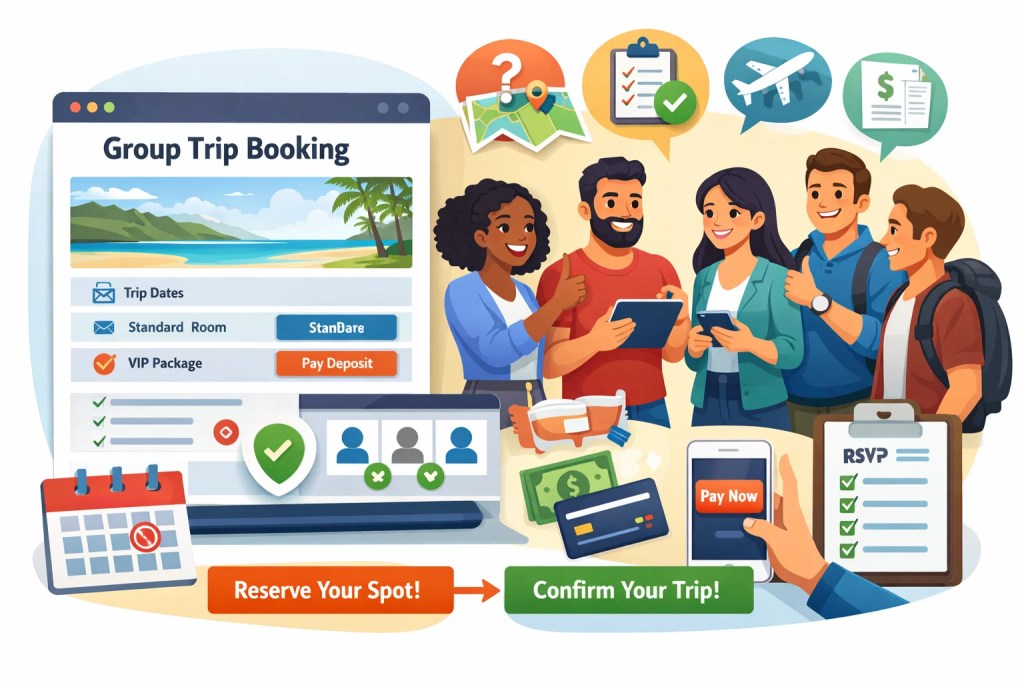
A group trip booking page is a dedicated page where participants can:
- Understand the trip details
- Review dates, destination, and inclusions
- See pricing and payment options
- Pay a deposit or full amount
- Confirm their participation
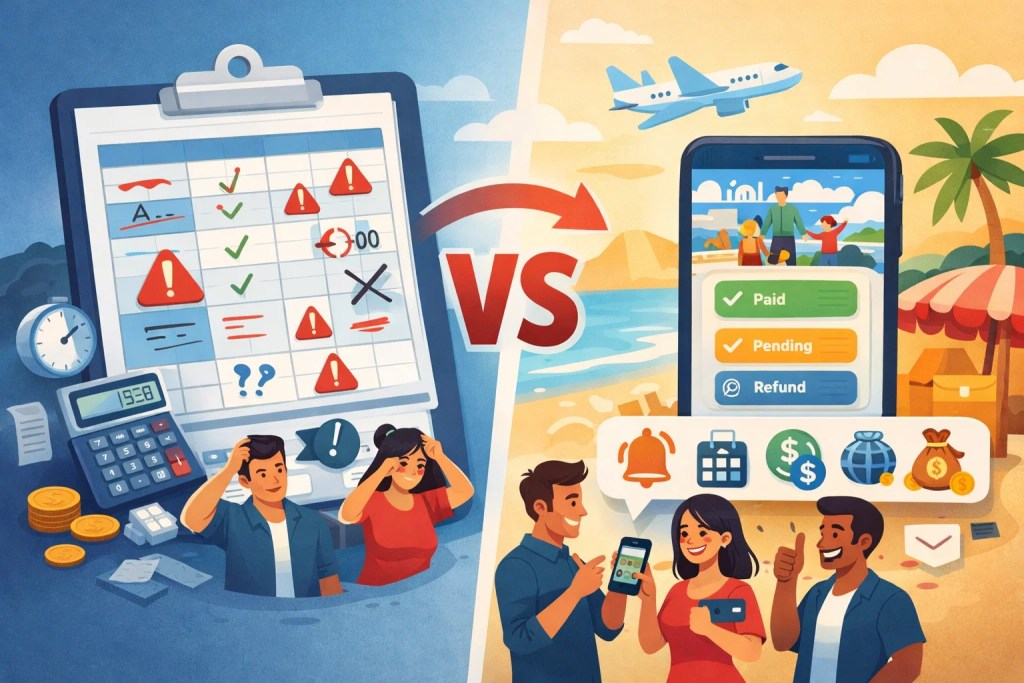
Unlike standard travel booking pages, group trip booking pages must support partial payments, shared deadlines, participant coordination, and clear communication.
You are not selling a one-time transaction. You are managing a collective commitment.
Why Group Trip Booking Pages Need a Different Approach
Group travel decisions are slower and more cautious than solo bookings.
Most travelers:
- Need time to coordinate with friends or family
- Prefer deposits instead of full upfront payments
- Want reassurance that the trip is professionally managed
- Care deeply about cancellation terms and refunds
A high-converting group trip booking page addresses these concerns directly instead of leaving them unanswered.
Above-the-Fold Clarity Is Non-Negotiable
Your booking page should answer three questions immediately:
- What is this trip?
- Who is it for?
- When and where is it happening?
Avoid long paragraphs at the top. Use short, clear statements that help users quickly understand if the trip is relevant to them.
This is where many booking pages fail by being vague or overly promotional.
Pricing Transparency Drives Conversions
Show Pricing Early
Hidden pricing is one of the biggest reasons people abandon group trip booking pages.
Your page should clearly show:
- Total trip cost
- What is included and excluded
- Deposit amount (if applicable)
- Remaining balance and due dates
If users have to message you just to understand pricing, you will lose bookings.
Use Pricing Tiers When It Makes Sense
Tiered pricing works especially well for group trips. Examples include:
- Shared vs private accommodations
- Early bird vs regular pricing
- Participant vs guest packages
This gives travelers choice without forcing them into a single option.
Payment Flexibility Reduces Drop-Offs
Deposits Increase Commitment
Asking for full payment upfront often scares people away.
High-converting group trip booking pages usually offer:
- A low upfront deposit
- Clear balance payment timelines
- Automatic reminders for remaining payments
This lowers the barrier to entry while still securing commitment.
Make Payments Simple and Secure
Your booking page should support:
- Online payments
- Multiple payment methods where possible
- Clear confirmation after payment
Manual transfers and offline coordination slow down conversions and increase admin work.
Trust Signals Matter More Than Design
Add Social Proof Where It Counts
Trust is the foundation of group travel bookings.
Include:
- Testimonials from past participants
- Short quotes from previous trips
- Real feedback that shows reliability
Place social proof near pricing and payment sections, not hidden at the bottom.
Clearly Identify the Organizer
People want to know who they are trusting with their money.
Your booking page should include:
- Organizer name
- Short background or experience
- Link to your website or social presence if relevant
This human connection reduces hesitation and increases confidence.
Reduce Anxiety With Clear Policies
Cancellation and Refund Policies
Never hide your policies.
Your group trip booking page should clearly explain:
- Cancellation deadlines
- Refund eligibility
- What happens if the trip is canceled
Clear policies build trust, even when they are strict.
Explain What Happens After Booking
Uncertainty after payment creates anxiety.
Add a short section explaining:
- How confirmation is sent
- What communication participants will receive
- Where updates and trip details will be shared
Calls-to-Action That Actually Work
Use Commitment-Based Language
Avoid generic CTAs like “Submit” or “Pay Now.”
Instead, use:
- Reserve Your Spot
- Join the Trip
- Save Your Seat With a Deposit
These feel safer and more aligned with group decision-making.
Repeat CTAs Throughout the Page
Do not rely on a single CTA at the end.
Place CTAs:
- After pricing sections
- After explaining payment flexibility
- After social proof
Consistency helps users move forward without confusion.
Mobile Optimization Is Essential
Most group travelers will visit your booking page on mobile.
Make sure your page:
- Loads quickly
- Uses large, tappable buttons
- Keeps forms short and focused
Long, complex forms reduce completion rates.
Automate the Admin Work
Stop Chasing Payments Manually
Manual follow-ups are one of the biggest pain points for group trip organizers.
A strong booking system should:
- Track RSVPs automatically
- Send payment reminders
- Update availability in real time
Centralize Participant Communication
Avoid managing bookings across:
- Email threads
- WhatsApp groups
- Spreadsheets
Centralized communication improves clarity for both hosts and participants.
SEO Best Practices for a Group Trip Booking Page
Use the Primary Keyword Naturally
Your group trip booking page should include the keyword:
- In the page title and H1
- In at least one H2 heading
- Naturally throughout the content
Write for clarity first, SEO second.
Include an FAQ Section
FAQs improve search visibility and reduce support questions.
Common questions include:
- Can I pay in installments?
- Is my spot confirmed after the deposit?
- What happens if I cancel?
- How do group payments work?
Answering these upfront improves conversions.
Common Group Trip Booking Page Mistakes
- Hiding pricing behind forms
- Forcing full payment without explanation
- Using tools built for solo travel
- Overloading the page with unnecessary text
- Not explaining next steps
Avoiding these mistakes alone can improve conversion rates significantly.
A Proven Page Structure That Converts
- Clear trip overview
- Dates, destination, and audience
- Pricing and payment options
- Trust signals and organizer details
- Policies and FAQs
- Clear CTAs to reserve a spot
This structure keeps users moving forward instead of getting stuck.
Why SquadTrip Works for Group Trip Booking Pages
SquadTrip is built specifically for group travel, not generic eCommerce.
With SquadTrip, you can:
- Create a clean group trip booking page
- Accept deposits and full payments
- Track RSVPs automatically
- Manage participant details in one place
- Reduce manual follow-ups
Conclusion
A high-converting group trip booking page is built on clarity, trust, and simplicity.
When travelers understand pricing, feel confident about payments, and know exactly what happens next, they are far more likely to commit.
If you are tired of juggling tools, chasing payments, and answering the same questions repeatedly, upgrading your booking experience is the next step.
Build your next group trip booking page with SquadTrip and turn interest into confirmed bookings with less effort.
Frequently Asked Questions About Group Trip Booking Pages
What is a group trip booking page?
A group trip booking page is a dedicated page where multiple travelers can review trip details, see pricing, pay deposits or full amounts, and confirm their participation in a shared trip. Unlike individual booking pages, it supports group coordination, shared deadlines, and flexible payments.
Why do group trips need a separate booking page?
Group trips involve more complexity than solo bookings. Travelers often need flexible payments, clear policies, and reassurance that the trip is well-organized. A dedicated group trip booking page reduces confusion, builds trust, and improves conversion rates.
What should a high-converting group trip booking page include?
A high-converting group trip booking page should include:
- Clear trip overview (dates, destination, audience)
- Transparent pricing and payment options
- Deposit and balance payment timelines
- Cancellation and refund policies
- Organizer details and trust signals
- Clear calls-to-action to reserve a spot
Should I allow deposits on my group trip booking page?
Yes. Allowing deposits lowers the barrier to entry and increases commitment. Many travelers are hesitant to pay the full amount upfront. Deposits make it easier for people to say yes while still securing their spot.
How much deposit should I collect for a group trip?
Most group trip organizers collect 10% to 30% of the total trip cost as a deposit. The exact amount depends on your expenses, timelines, and cancellation policy. The key is to clearly communicate how and when the remaining balance is due.