TL;DR :
- Selling out a wellness retreat in 2026 depends on clarity, trust, and structure, not flashy marketing.
- Guests book when the purpose is clear, pricing is transparent, and the schedule balances guidance with real downtime.
- Simple booking, honest communication, and real scarcity help people decide without pressure.
- With SquadTrip, hosts can manage bookings, payment plans, guest details, and communication in one place, making planning easier and the guest experience smoother from signup to follow up.
Introduction
Host a Wellness Retreat in 2026 and you will quickly notice that guests are more intentional than ever. They are careful with their time, selective with their money, and clear about what they want from a retreat experience.
Selling out a wellness retreat today is not about hype or flashy visuals. It comes down to clarity, structure, and trust. When people understand who the retreat is for, what they will experience, and how everything works, booking becomes easier.
This guide walks through how to host a wellness retreat that attracts the right audience and fills up without last minute stress.
Read More : How to Host a Retreat and Make Money
Why Wellness Retreats Look Different in 2026
Wellness travel has grown up.
Guests are no longer booking just because a retreat looks peaceful. They want to know what problem it solves and what they will walk away with.
In 2026, most retreat guests expect :
- A clear theme or outcome
- Smaller and more personal group sizes
- Transparent pricing
- Flexible payment options
- Simple booking and communication
Hosts who adapt to these expectations are the ones seeing consistent sell outs.
Host a Wellness Retreat With a Clear Focus
Before picking dates or locations, get clear on your retreat’s purpose.
Ask yourself :
- Who is this retreat designed for
- What challenge does it help them with
- How should they feel by the end
A retreat with a focused outcome is easier to explain and easier to sell.
Popular retreat focuses include :
- Burnout recovery
- Beginner friendly yoga or movement
- Mindfulness and stress relief
- Fitness and nutrition resets
- Emotional healing or life transitions
Clarity here shapes every decision that follows.
Choose a Location That Supports the Experience
The location should make the retreat feel easier, not harder.
When choosing a venue, consider :
- Travel accessibility
- Quiet and calm surroundings
- Comfortable accommodation
- Outdoor space and natural light
- Weather during your dates
A remote location can work well for deep rest, while a well connected town may suit first time retreat guests.
The simpler it feels to attend, the more likely people are to book.
Create a Balanced Retreat Schedule
A strong wellness retreat has structure and breathing room.
Avoid filling every hour of the day. Guests need space to rest, reflect, and integrate.
A balanced schedule often includes :
- One or two main sessions each day
- Optional activities such as walks or journaling
- Free time between sessions
- Shared meals that encourage connection
Sharing a sample daily schedule ahead of time helps guests picture themselves there and builds confidence.
Price Your Retreat Clearly and Honestly
Pricing confusion is one of the biggest reasons guests hesitate.
Start by calculating :
- Accommodation costs
- Food and catering
- Space or venue rental
- Instructor or facilitator fees
- Supplies and materials
- Marketing and software tools
Then decide on pricing that feels fair for guests and sustainable for you.
In 2026, guests respond well to :
- Early bird pricing
- Different room options
- Payment plans that spread costs over time
Be clear about what is included and what is not. Transparency reduces questions and builds trust.
Build a Retreat Page That Answers Real Questions
Your retreat page should feel like a helpful conversation.
Make sure it clearly explains :
- Who the retreat is for
- What guests will experience
- Dates, location, and length
- What is included
- Pricing and payment options
- A sample schedule
- Who is hosting and why
- How and when to book
Avoid vague language. Write plainly and directly.
Clarity converts better than clever wording.
Build Trust Before Asking for the Booking
People book retreats when they trust the host.
Ways to build trust include :
- Sharing your story and why you host retreats
- Showing past retreat photos or testimonials
- Hosting live Q and A sessions
- Answering common questions openly
- Being consistent in how you communicate
If this is your first retreat, honesty about your background and intentions matters more than trying to appear perfect.
Market Your Retreat Without Feeling Salesy
Good retreat marketing feels like an invitation.
Instead of only posting booking links, talk about :
- Why the retreat exists
- What inspired it
- Common struggles your audience faces
- What a day at the retreat feels like
- Questions people usually ask
Effective channels in 2026 include email, social media stories, small group chats, and live sessions.
People book when they feel understood.
Use Real Scarcity to Encourage Decisions
Scarcity works best when it is genuine.
Examples include :
- Limited group size
- Fixed booking deadlines
- Room availability updates
- Early pricing cutoffs
Keep guests informed with honest updates like :
- Five spots remaining
- Early pricing ends this week
- Only shared rooms left
This helps people decide without pressure.
Make Booking and Payments Simple
A complicated booking process can lose interested guests.
Most guests want :
- A clear booking page
- Payment confirmation
- Automated reminders
- Easy access to retreat details
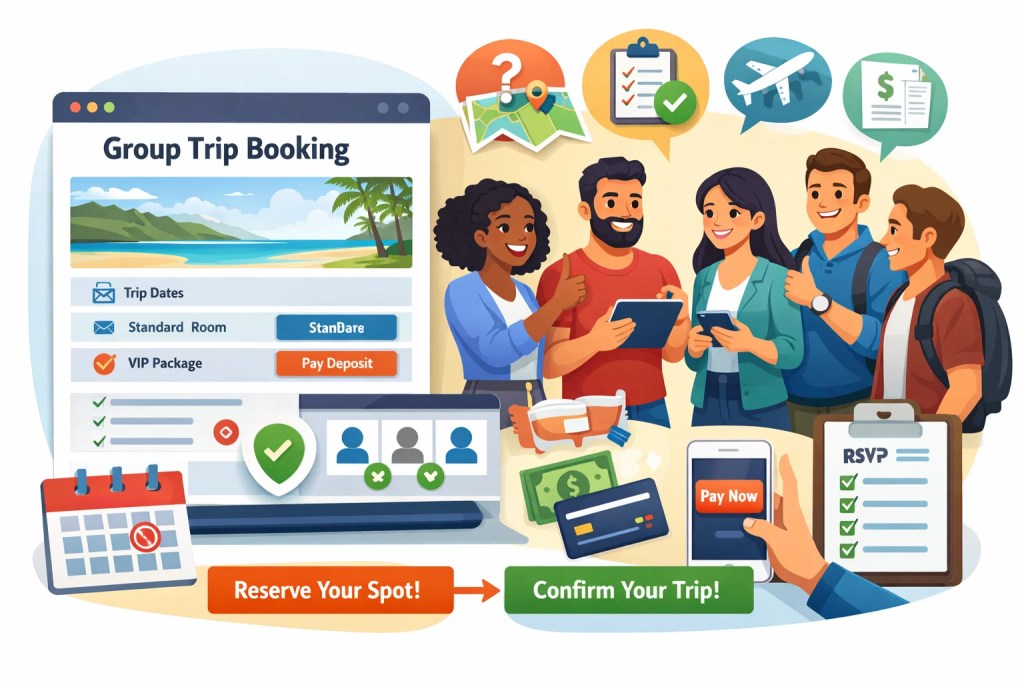
Using a platform like SquadTrip helps hosts manage bookings, payment plans, and guest communication in one place. This reduces manual work and gives guests confidence from the moment they sign up.
Smooth logistics improve the overall experience before the retreat even begins.
Communicate Clearly Before and After the Retreat
Once someone books, communication becomes part of the experience.
Before the retreat, share :
- Welcome details
- Packing guidance
- Travel information
- Key dates and timelines
- How to contact you
After the retreat, follow up with :
- A thank you message
- Photos or shared memories
- A short feedback form
- Information about future retreats
Strong follow up turns guests into repeat attendees.
Common Mistakes That Prevent Sell Outs
Avoid these common issues :
- Trying to appeal to everyone
- Overloading the schedule
- Hiding prices
- Promoting too late
- Relying only on social media
- Managing payments manually
- Poor communication
Most retreats fail to sell out due to lack of clarity, not lack of interest.
How Early You Should Start Planning for 2026
Planning ahead gives you breathing room.
A simple timeline :
- 9 to 12 months before : define concept and location
- 6 to 9 months before : build retreat page and pricing
- 4 to 6 months before : start promotion
- 2 to 3 months before : push urgency
- Final month : onboarding and communication
Early planning reduces stress and improves results.
Final Thoughts
Hosting a wellness retreat in 2026 is about intention, structure, and trust.
When your purpose is clear, your pricing is transparent, and your booking process is simple, selling out becomes much more achievable.
A well planned retreat does more than fill spots. It creates meaningful experiences for your guests and sets the foundation for future retreats.
If you want to keep bookings, payments, and guest communication organized in one place, tools like SquadTrip can make the process easier. It helps hosts manage signups, payment plans, and retreat details without juggling spreadsheets or manual follow ups, so you can focus on the experience you are creating.
Frequently Asked Questions
1. How far in advance should I plan a wellness retreat for 2026?
It is best to start planning at least nine to twelve months in advance. This gives you time to secure the right location, set pricing, build your retreat page, and promote without rushing.
2. How many people should attend a wellness retreat?
Most wellness retreats work best with small groups. Between ten and twenty guests allows for personal attention while still making the retreat financially sustainable.
3. Do I need certifications to host a wellness retreat?
It depends on the type of retreat. If you are leading yoga, fitness, or therapeutic sessions, proper training or certification is important. If you are hosting and bringing in facilitators, your role can focus on organization and experience.
4. What should be included in the retreat price?
Most guests expect accommodation, meals, scheduled sessions, and group activities to be included. Always list what is covered and what is not so there are no surprises.
5. How can I help guests afford a wellness retreat?
Offering payment plans, early bird pricing, and shared room options makes retreats more accessible and helps more people commit.