
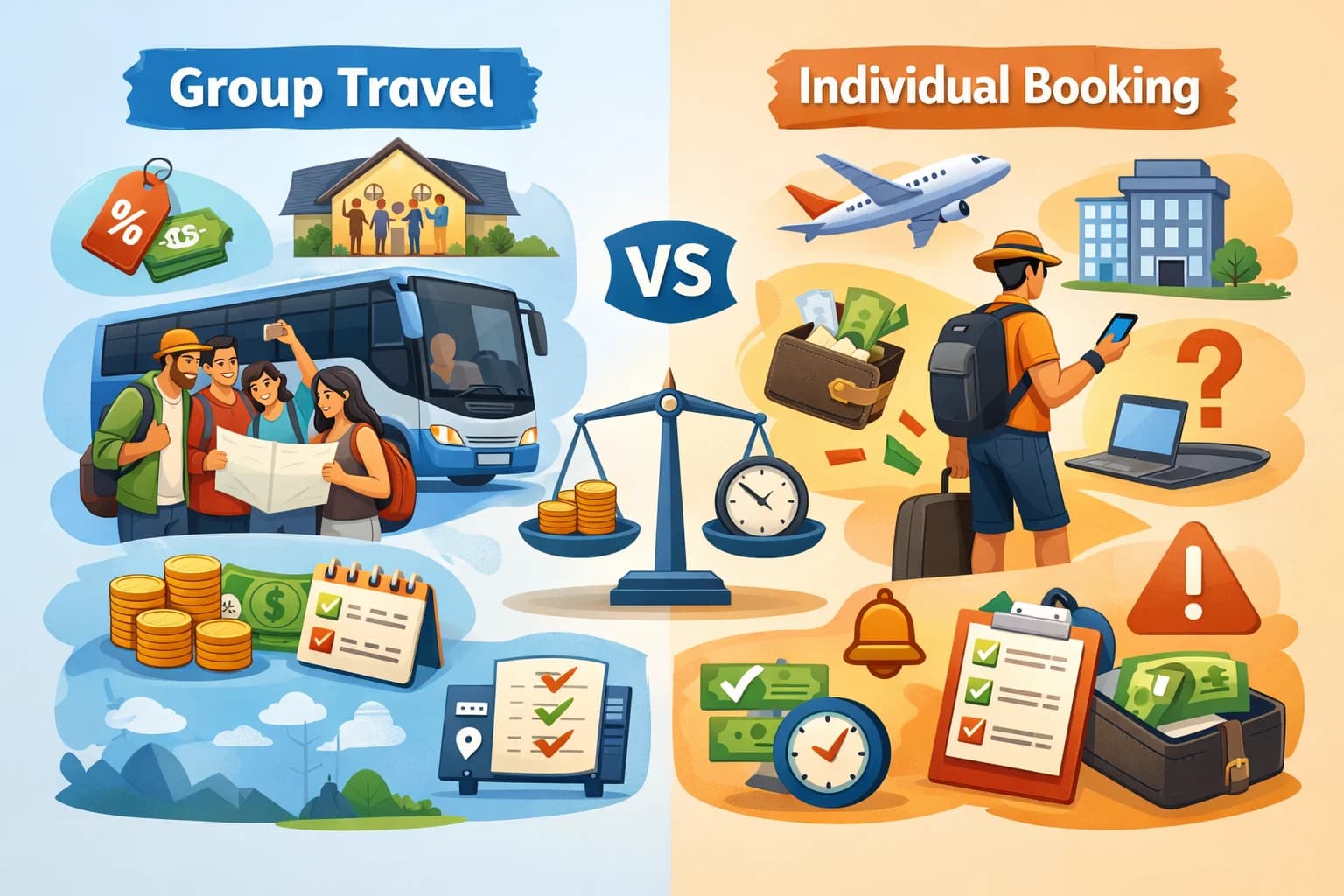
TL;DR
-
Group travel vs individual booking comes down to cost, coordination, and travel goals
-
Group travel often reduces per-person costs through shared pricing and bulk deals
-
Individual booking offers flexibility but usually costs more and requires more effort
-
Coordination, payments, and communication are the biggest challenges in group travel
-
Clear pricing breakdowns help travelers choose the right option
-
Tools like SquadTrip simplify group travel payments, RSVPs, and planning in one place
Introduction
Planning a trip today means making a key decision early on: group travel vs individual booking. This choice affects everything from cost and flexibility to planning effort and traveler experience. Whether you are organizing a friends’ getaway, a corporate retreat, a yoga retreat, a destination wedding, or a school trip, understanding how these two booking approaches compare can save time, money, and stress.
This guide breaks down the real pros, cons, and cost differences between group travel and individual booking. By the end, you will know which option fits your situation and how to manage it efficiently.
Planning a group trip? SquadTrip helps you collect payments, manage RSVPs, and keep everyone organized without chasing people.
What Is Group Travel?
Group travel means multiple people traveling together under a shared plan. This usually includes a common destination, dates, accommodations, and often shared activities. One person or organization typically acts as the organizer and coordinates logistics for the group.
Common group travel examples
-
Friends planning a vacation together
-
School, college, or youth trips
-
Destination weddings and family reunions
-
Faith-based or community trips
In most cases, group travel involves shared costs, coordinated payments, and collective decision-making.
What Is Individual Booking?
Individual booking means each traveler plans and pays for their trip separately, even if they are traveling to the same destination as others. Flights, hotels, and activities are booked independently, and there is no central organizer handling logistics.
Common individual booking scenarios
-
Solo travel
-
Couples planning their own trips
-
Friends traveling together but booking separately
-
Flexible travel plans with different arrival or departure dates
Individual booking gives travelers full control over their plans but shifts all responsibility to each person.
Group Travel vs Individual Booking: Key Differences at a Glance
Factor
Group Travel
Individual Booking
Cost
Usually lower per person
Often higher
Flexibility
Limited
High
Planning effort
Centralized
Individual
Payment handling
Shared or split
Separate
Coordination
Required
Minimal
Risk of dropouts
Higher
Lower
Discounts
Group rates available
Rare
Cost Breakdown: Group Travel vs Individual Booking
Cost is one of the biggest reasons people compare group travel vs individual booking. Let’s look at where the money actually goes.
Accommodation costs
Group travel
-
Access to group discounts
-
Ability to split costs for villas, apartments, or large rentals
-
Per-night cost is usually lower when shared
Individual booking
-
Paying full price for hotel rooms
-
Limited access to bulk discounts
-
Higher per-person accommodation cost
Transportation costs
Group travel
-
Group flight deals or negotiated rates
-
Shared ground transportation
-
Lower per-person transfer costs
Individual booking
-
Each traveler pays market price
-
Separate airport transfers
-
No shared transportation savings
Activities and experiences
Group travel
-
Group pricing for tours and experiences
-
Private guides at lower per-person rates
-
Easier scheduling
Individual booking
-
Retail pricing
-
Limited availability for popular activities
-
Higher overall spend
Hidden costs to watch out for
-
Cancellation penalties
-
Late payments from group members
-
Currency fluctuations
-
Payment processing fees
Pros of Group Travel
Lower overall cost
Group travel almost always wins on price when organized well. Bulk pricing, shared accommodation, and group discounts reduce individual expenses.
Shared experiences
Traveling together builds stronger connections. Group trips are ideal for bonding, celebrations, and shared memories.
Centralized planning
One itinerary, one plan, and one timeline reduce confusion when handled correctly.
Predictable budgeting
Group packages often include accommodation, activities, and sometimes meals, making budgeting easier.
Cons of Group Travel
Less flexibility
Group decisions mean compromises. Not everyone gets their preferred schedule or activity.
Coordination challenges
Collecting payments, managing RSVPs, and keeping everyone informed can be stressful without the right tools.
Risk of delays
Late payments or cancellations from one person can impact the entire group.
Organizer burnout
The person coordinating the trip often ends up doing unpaid administrative work.
Pros of Individual Booking
Full flexibility
Travelers choose their own flights, hotels, and activities.
Personal control
No need to wait for group decisions or approvals.
Easier cancellations
Individual plans are simpler to cancel or change.
Suitable for solo travelers
Best for people who value independence over coordination.
Cons of Individual Booking
Higher costs
No access to group discounts or shared expenses.
Disconnected experience
Travelers may miss out on shared activities or experiences.
Planning effort
Each traveler must research, book, and manage their own trip.
Scheduling conflicts
Different arrival times and accommodations can complicate meetups.
When Group Travel Makes More Sense
Group travel is usually the better choice when:
-
Cost savings matter
-
The trip has a shared purpose
-
Activities are planned together
-
One person or organization can lead coordination
Common use cases
-
Corporate retreats
-
Yoga and wellness retreats
-
School and youth trips
-
Destination weddings
-
Family reunions
When Individual Booking Is the Better Option
Individual booking works best when:
-
Travelers want different schedules
-
Flexibility is more important than cost
-
The group is loosely connected
-
No central organizer is available
Examples include solo travel, extended stays, or flexible leisure trips.
Group Travel vs Individual Booking for Organizers
Organizers face a very different reality compared to travelers.
Challenges organizers face
-
Chasing payments
-
Tracking who has paid
-
Managing cancellations
-
Answering repeated questions
-
Updating participants
How tools change the equation
Without the right system, group travel can feel overwhelming. With a platform built for group trips, organizers regain control.
SquadTrip lets organizers:
-
Set payment deadlines
-
Track RSVPs in real time
-
Send updates to all participants
-
Reduce admin work
Payment Management: The Biggest Difference
Payments are where group travel vs individual booking really diverge.
Group travel payments
-
Split payments
-
Installments
-
Deposits
-
Deadlines
Individual booking payments
-
One-time payments
-
Personal responsibility
Manual payment collection is where most group trips struggle.
Risk and Responsibility Comparison
Area
Group Travel
Individual Booking
Financial risk
Shared
Individual
Cancellation impact
Group-wide
Personal
Payment delays
High risk
Low risk
Organizer liability
Higher
None
This is why structured systems matter more for group travel.
Cost Example: Group vs Individual Trip
Scenario: 10 people traveling for 5 days
Group travel
-
Villa rental split across 10 people
-
Shared airport transfers
-
Group tours
-
Lower per-person cost
Individual booking
-
10 separate hotel rooms
-
Separate taxis
-
Retail pricing for activities
-
Higher total spend
In most real-world cases, group travel saves 15–30% per person.
How to Decide Between Group Travel and Individual Booking
Ask these questions:
-
Do we want shared experiences or flexibility?
-
Is cost a priority?
-
Who will manage coordination?
-
How will payments be handled?
If the answers lean toward shared planning and cost savings, group travel is the better option.
Best Practices for Successful Group Travel
Set expectations early
Define pricing, deadlines, and cancellation rules upfront.
Use clear payment systems
Avoid manual transfers and spreadsheets.
Communicate centrally
One source of truth reduces confusion.
Plan for dropouts
Have policies in place before issues arise.
Final Thoughts: Group Travel vs Individual Booking
Choosing between group travel vs individual booking is not about which is better overall. It is about which fits your goals, budget, and planning style.
Group travel offers cost savings, shared experiences, and structure but requires coordination. Individual booking offers flexibility and independence but often costs more and lacks cohesion.
For organizers, the difference comes down to systems. With the right tools, group travel becomes simpler, smoother, and far less stressful.
Ready to plan a group trip without the chaos? Use SquadTrip to manage payments, RSVPs, and coordination in one simple platform.
FAQs: Group Travel vs Individual Booking
What is the main difference between group travel and individual booking?
The main difference is coordination and cost. Group travel involves shared planning, pricing, and experiences, while individual booking allows each traveler to plan and pay separately.
Is group travel cheaper than individual booking?
In most cases, yes. Group travel often reduces costs through shared accommodations, group discounts, and bulk pricing on activities and transportation.
Why is group travel harder to organize?
Group travel requires managing payments, RSVPs, deadlines, and communication for multiple people. Without a system, organizers often end up chasing payments and answering repeated questions.
When does individual booking make more sense?
Individual booking works better when travelers want flexibility, different schedules, or complete control over their plans, even if it costs more.
How do group payments usually work?
Group trips often involve deposits, split payments, or installments with set deadlines. Managing this manually can be difficult without a dedicated group payment tool.