TL;DR :
- Strong retreat itinerary ideas balance structure with flexibility
- Guests remember how a retreat made them feel, not how busy it was
- A clear daily flow builds trust, reduces stress, and improves engagement
- The best itineraries leave room for rest, reflection, and connection
- Different retreat goals need different itinerary styles
- Simple logistics and clear communication matter as much as activities
- SquadTrip helps hosts manage schedules, payments, and guest details in one place
Introduction
Planning a retreat is about more than booking a venue and filling time slots. The right retreat itinerary ideas shape how guests experience the entire journey, from arrival to departure. A thoughtful itinerary creates rhythm, builds emotional connection, and leaves guests feeling restored rather than rushed.
Whether you are hosting a wellness retreat, yoga getaway, leadership offsite, or creative workshop, your itinerary sets expectations and defines the energy of the experience. Guests want clarity, not overload. They want intention, not constant activity. And most importantly, they want space to actually feel the retreat, not just attend it.
This guide walks through how to design retreat itineraries that feel meaningful, balanced, and memorable. You will also learn how to adapt your schedule based on group size, retreat goals, and guest energy levels, while keeping planning simple and organized.
Read More : 6 Best Health and Wellness Retreats for 2026
Why Retreat Itinerary Ideas Matter More Than You Think
An itinerary is not just a schedule. It is a promise.
Guests decide how safe, supported, and excited they feel based on how your retreat is structured. A chaotic or unclear itinerary creates anxiety. An overly packed one causes burnout. A thoughtful itinerary, on the other hand, helps guests relax because they know what to expect without feeling boxed in.
Strong retreat itinerary ideas do three things well :
- They guide guests without controlling them
- They support the retreat theme and intention
- They leave room for rest, reflection, and organic connection
The best retreats are remembered for moments, not minutes. Your itinerary should make those moments possible.
Key Principles Behind Great Retreat Itinerary Ideas
Before looking at specific examples, it helps to understand the principles that make any itinerary work.
1. Start With the Emotional Goal
Ask yourself one question first :
How should guests feel when they leave?
- Calm
- Reconnected
- Inspired
- Confident
- Grounded
Your itinerary should support that feeling throughout the retreat. If your goal is rest, long free blocks matter more than back-to-back sessions. If your goal is growth, reflection time becomes just as important as workshops.
2. Build a Natural Daily Flow
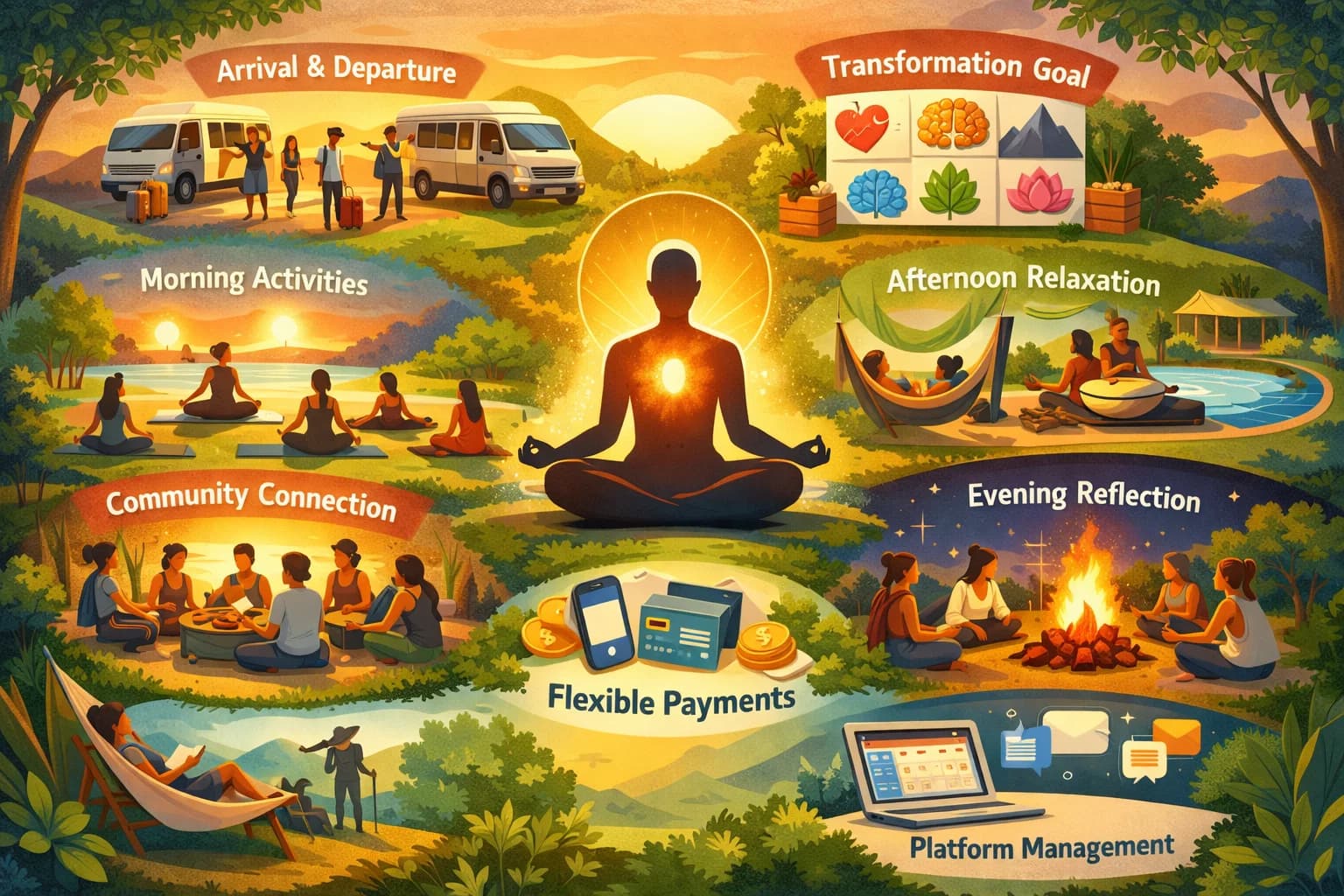
Every day should follow a rhythm that feels human :
- Gentle mornings
- Engaging mid-day activities
- Slower evenings
Avoid placing intense sessions late at night or stacking high-energy activities without breaks.
3. Balance Structure and Freedom
Guests appreciate knowing what is planned, but they also want autonomy.
Good retreat itinerary ideas clearly mark :
- Guided sessions
- Optional activities
- Free time
This balance prevents overwhelm and respects different energy levels.
Plan your retreat flow in one place with SquadTrip
Retreat Itinerary Ideas by Retreat Type
Different retreats call for different pacing and priorities. Below are proven itinerary structures you can adapt.
Retreat Itinerary Ideas for Wellness Retreats
Wellness retreats focus on rest, nervous system regulation, and gentle connection. Less is more.
1. Sample Daily Flow
Morning
- Quiet wake-up window
- Light movement or breathwork
- Nourishing breakfast
Midday
- Wellness workshop or guided session
- Free time for journaling, walking, or rest
- Lunch
Afternoon
- Optional spa time or nature activity
- Group reflection or sharing circle
Evening
- Gentle yoga or meditation
- Dinner
- Early wind-down
2. Why This Works
- Guests never feel rushed
- Silence and free time are respected
- Energy stays consistent throughout the retreat
Retreat Itinerary Ideas for Yoga Retreats
Yoga retreats often attract guests with different experience levels. The itinerary should feel supportive, not demanding.
1. Sample Daily Flow
Morning
- Sunrise yoga
- Breakfast
Late Morning
- Yoga philosophy or alignment workshop
Afternoon
- Free time or optional excursion
- Lunch
Evening
- Restorative yoga
- Group discussion or intention setting
Tips for Yoga Retreat Itineraries
- Offer optional sessions for advanced practices
- Avoid more than two physical practices per day
- Build in recovery time
Guests should leave feeling better than when they arrived.
Read More : 10 Types of Retreats : A Complete Guide for Every Kind of Traveler
Retreat Itinerary Ideas for Creative or Writing Retreats
Creative retreats need long, uninterrupted blocks of time. Over-structuring kills creativity.
1. Sample Daily Flow
Morning
- Quiet creative block
- Optional prompt or inspiration session
Midday
- Lunch
- Free creative time
Afternoon
- Peer sharing or feedback circle
Evening
- Light group activity or storytelling
2. Why This Works
- Deep focus is protected
- Social connection feels optional, not forced
- Creative energy stays high
Retreat Itinerary Ideas for Corporate or Leadership Retreats
These retreats need clarity, efficiency, and space for real conversation.
1. Sample Daily Flow
Morning
- Strategy session or workshop
- Break
Midday
- Team activity or facilitated discussion
- Lunch
Afternoon
- Breakout sessions
- Reflection or action planning
Evening
- Informal networking or dinner
2. Key Considerations
- Avoid full-day workshops without breaks
- Schedule thinking time, not just talking time
- Keep evenings lighter to prevent burnout
Designing Arrival and Departure Days That Feel Smooth
Arrival and departure days set the tone and lasting impression.
1. Arrival Day Itinerary Ideas
- Flexible check-in window
- Welcome snack or drink
- Light opening circle
- No heavy sessions
Guests may be tired from travel. Keep things gentle.
2. Departure Day Itinerary Ideas
- Simple morning activity
- Closing reflection or intention setting
- Clear checkout instructions
Avoid squeezing in major sessions on the last day. Let guests leave calm, not rushed.
Common Mistakes to Avoid When Planning Retreat Itineraries
Even experienced hosts fall into these traps.
1. Overpacking the Schedule
More activities do not equal more value. Guests need time to integrate what they experience.
2. Ignoring Energy Levels
What feels exciting on paper may feel exhausting in reality. Always test your itinerary against real human energy.
3. Lack of Clear Communication
Guests should know :
-
What is mandatory
-
What is optional
-
What they need to prepare
-
Confusion creates stress
Read More : 5 Common Group Trip Planning Mistakes for Hosts to Avoid
How to Personalize Retreat Itinerary Ideas for Your Audience
Your audience matters more than trends.
Ask yourself :
- Are guests first-time retreat attendees or experienced travelers?
- Do they value structure or flexibility?
- Are they introverted, extroverted, or mixed?
Send a short pre-retreat survey to understand expectations. Adjust your itinerary accordingly.
Using Flex Blocks to Improve Guest Experience
One of the most effective itinerary tools is the flex block.
Flex blocks are intentionally unscheduled periods labeled as :
- Free time
- Optional activity window
- Personal integration time
They give guests permission to rest without missing out.
How Technology Supports Better Retreat Itinerary Planning
A well-designed itinerary still fails if logistics are messy.
Guests need :
- Clear schedules
- Easy access to updates
- Smooth payment and booking flow
Managing this across emails, spreadsheets, and messages quickly becomes overwhelming.
Sample 3-Day Retreat Itinerary Framework
1. Day 1 : Arrival and Grounding
- Arrival window
- Welcome circle
- Light evening session
2. Day 2 : Core Experience
- Morning practice or workshop
- Deep focus session
- Free time
- Group reflection
3. Day 3 : Integration and Closing
- Gentle morning activity
- Closing circle
- Departure
This structure works across wellness, yoga, and creative retreats with small adjustments.
Final Checklist for Retreat Itinerary Planning
Before finalizing your itinerary, confirm :
- The primary goal is clear
- Each day has a natural flow
- Free time is intentionally included
- Arrival and departure days are light
- Guests know what is optional
- Logistics are simple and transparent
Conclusion : Retreat Itinerary Ideas That Guests Remember
The most successful retreats are not the busiest ones. They are the ones where guests feel seen, supported, and changed in a small but meaningful way. Thoughtful retreat itinerary ideas create space for those moments to happen.
By focusing on flow, flexibility, and intention, you can design itineraries that feel calm, purposeful, and memorable. When logistics are handled smoothly, guests can fully immerse themselves in the experience instead of worrying about schedules or payments.
If you want to simplify planning, communication, and group payments while delivering a better guest experience, SquadTrip gives retreat hosts the structure they need without adding friction.
Manage itineraries, payments, and guests in one place with SquadTrip
Frequently Asked Questions
1. How detailed should a retreat itinerary really be?
Detailed enough that guests feel safe and informed, but not so rigid that it feels controlling. A clear daily flow with optional sessions works better than minute-by-minute planning.
2. Is it okay to leave large blocks of free time in a retreat itinerary?
Yes, and it is often expected. Free time helps guests rest, reflect, and process the experience. Many guests value unscheduled time more than additional activities.
3. What’s the biggest mistake hosts make when planning retreat itineraries?
Overpacking the schedule. Too many sessions can overwhelm guests and reduce the emotional impact of the retreat.
4. How do I design an itinerary that works for different energy levels in one group?
Label sessions clearly as guided or optional and include flex blocks. This lets high-energy guests stay engaged while others rest without feeling left out.
5. Should arrival and departure days have full programming?
No. Arrival days should be light to account for travel fatigue, and departure days should focus on gentle closure rather than major sessions.